Display Sizing by the Standard
July 6, 2026 · 2 min read · SiteOps Command
The screen that looks fine from the front of the room is unreadable from the back — and “looks fine” is not how you size it. There is a standard for exactly this question, and it turns can-they-read-it into a distance you compute instead of a judgment you hope you got right.
Two ways to view, two distances
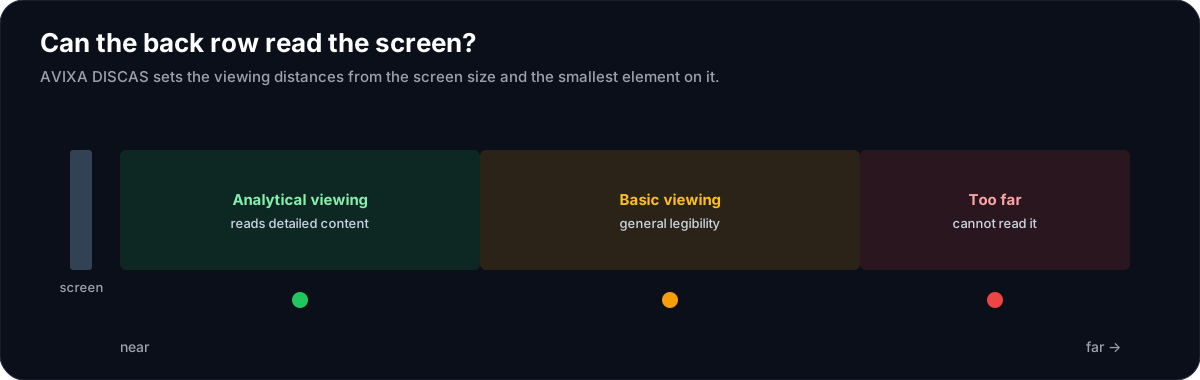
AVIXA DISCAS defines two viewing methods. Analytical decision making (ADM) is for detailed content — spreadsheets, drawings, dense slides — where every element has to be legible. Basic decision making (BDM) is for general content, where the gist is enough. Each sets a maximum viewing distance derived from the screen size and the smallest element the viewer must resolve.
The farthest seat decides the screen
Sizing to the front row is how you end up with a display the back row squints at. The right screen is the one that keeps the farthest analytical viewer inside the ADM distance — or, if the content is only ever general, the BDM distance. The number comes from the room and the content, not the catalog.
Angle matters too
DISCAS also bounds the horizontal viewing angle: a seat too far off-axis loses legibility and contrast even at the right distance. The seats in the far corners are the ones that fail first, and they are exactly the seats a quick eyeball misses.
Score the seats, do not guess the screen
Compute the viewing distance and angle for each seat against DISCAS before you pick the display, so the seat that cannot read the agenda shows up on the plan rather than in the meeting. This is the sightline half of scoring a conference room; the audio half is why conference-room audio fails.
A short checklist
- Size the display for the farthest seat, not the front row.
- Use the ADM distance for detailed content, BDM for general.
- Check the horizontal viewing angle for the corner seats.
- Score each seat against DISCAS before choosing the screen.
A display sized for the demo is a display the back of the room cannot use. See conference AV, scored by the standard, the conference AV page, or the integrator workflow; or book a demo to score a room on your own plan.
Frequently asked
- What is AVIXA DISCAS?
- A standard for sizing displays so on-screen content is legible from every seat. It defines two viewing methods — analytical for detailed content and basic for general content — and sets a maximum viewing distance from the screen size and the smallest element on it.
- How big should a conference-room display be?
- Big enough that the farthest seat is still within the DISCAS viewing distance for the content shown: the analytical distance for detailed material, the basic distance for general viewing. The right size comes from the room and the content, not a rule of thumb.
- What is the difference between ADM and BDM?
- Analytical decision making (ADM) is for content where every element must be legible, like spreadsheets; basic decision making (BDM) is for general viewing where the overall picture is enough. ADM requires viewers to sit closer than BDM.