The Autonomous Site Walk
July 6, 2026 · 2 min read · SiteOps Command
The most tedious part of a survey is walking every square metre of the building so you do not miss the one dead spot that becomes next week’s complaint. The model can walk it for you.
A systematic pass, not a spot check
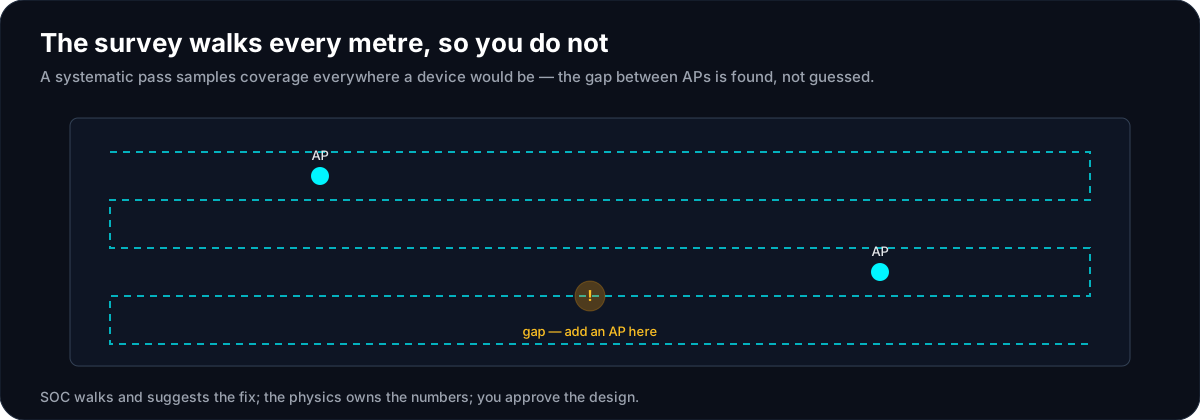
Reading a heatmap by eye catches the obvious gaps and quietly misses the subtle ones — the seam between two access points, the shadow behind the one rack, the far corner past the stairwell. An autonomous pass covers the space on a systematic grid, sampling coverage everywhere a person or a device would actually be, so the gap is found rather than guessed.
It flags the fix, not only the gap
Finding a dead spot is half the job. The walk pairs each gap with a physics-backed remedy — move this access point, add one here, raise the mount, change the tilt — derived from the same propagation model that found the gap. The fix is a design change you can evaluate on the model, not a hunch you carry to the site.
No kit, no truck roll
This is the design pass done without a Sidekick and without a flight — the autonomous virtual site survey. The full workflow is in the virtual site survey, and the economics in the truck-roll math; the walk is the part that makes the sweep exhaustive instead of a spot check.
Where the human still leads
The walk proposes; you dispose. It flags gaps and suggests fixes; the physics owns the numbers, and you approve the design. On-site validation still matters for sign-off — the point is not to remove the engineer, but to automate the tedious, error-prone sweep that hides the dead spot until the customer finds it first.
A short checklist
- Let the walk cover the space systematically, not by eye.
- Take each flagged fix as a design change to evaluate, not a directive.
- Keep human approval on the final design.
- Validate on site for sign-off, not for discovery.
The dead spot you did not walk to is the dead spot the customer finds first. See how MSPs use it, the platform, or run the numbers on the ROI worksheet; or book a demo on your own floor plan.
Frequently asked
- What is an autonomous site survey?
- A systematic, model-driven pass over a building that samples coverage everywhere a device would be, finds the gaps, and pairs each with a physics-backed fix — without walking the space with survey hardware.
- Does an autonomous survey replace an engineer?
- No. It automates the tedious, error-prone sweep and proposes fixes; the physics owns the numbers and a person approves the design. On-site validation still matters for sign-off.
- How is this different from reading a heatmap?
- Reading a heatmap by eye catches the obvious gaps and misses the subtle ones. A systematic pass samples the whole space, so the gap between two access points or behind a rack is found rather than guessed.